
The Accessibility Gap

Why missing accessibility information isn’t merely inconvenient. It’s isolating. What the research actually says.

Here’s a question we get asked all the time at WheelEasy: “Why do you go to the trouble of checking every venue in person? Can’t you just trust what’s already online?”
The honest answer is no — and the research is finally catching up to what our community has been saying for years. Missing, vague, or wrong accessibility information doesn’t just mean a wasted afternoon. It means fewer trips. Fewer outings. Fewer connections. And, over time, more isolation.
This post pulls together the research — from Australia and around the world — that explains why accessibility information isn’t a nice-to-have. It’s the difference between a community where people roll out the door, and one where they stay home.
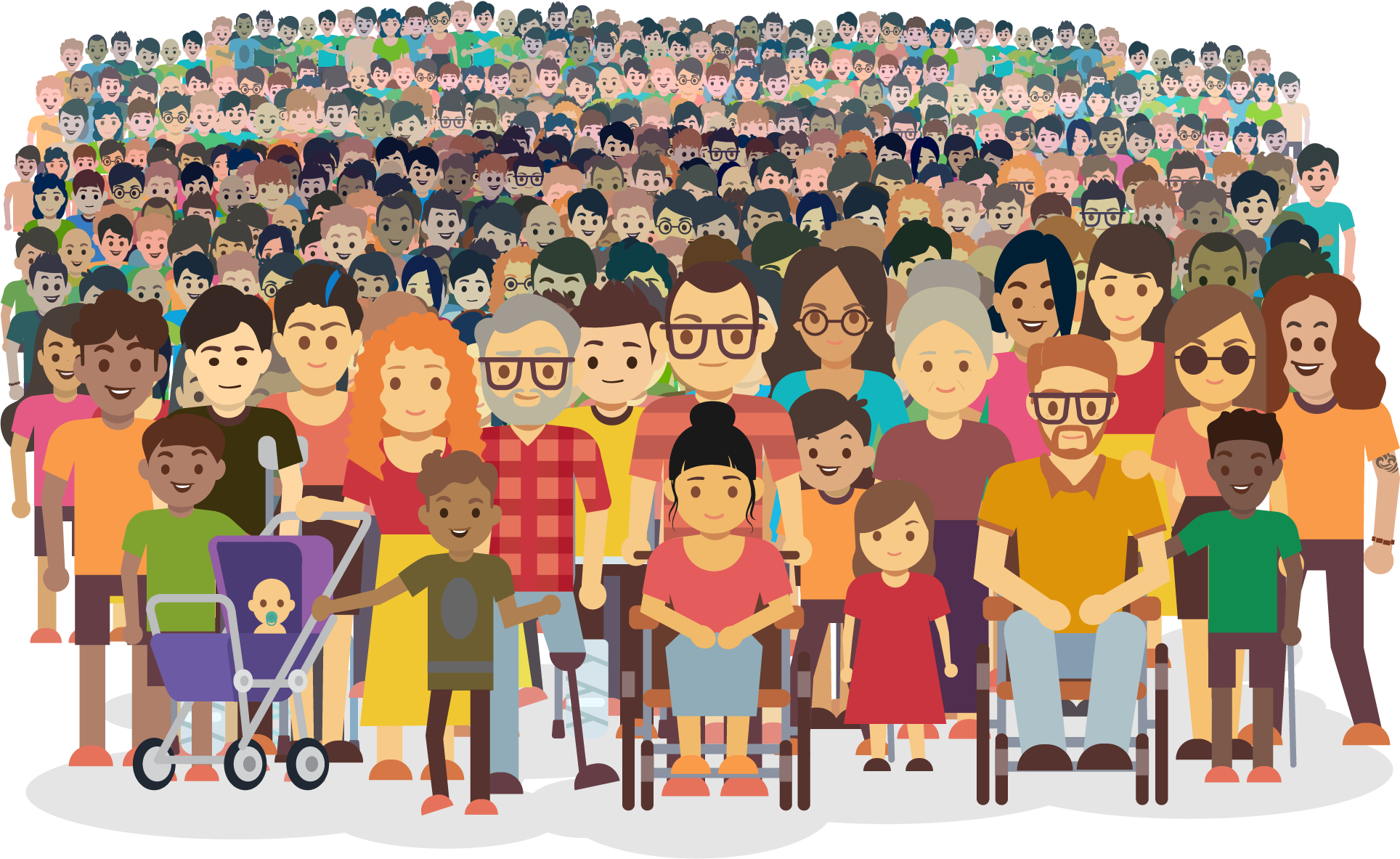
16% people in NSW use a mobility aid
That’s 218,200 people in New South Wales alone, according to figures cited by the Judicial Commission of NSW. And as one 2023 study of rural NSW wheelchair users put it, this group continues to face significant ongoing exclusion and isolation — underpinned by ableist assumptions that frame disability as an individual problem rather than an environmental and informational one.
It Starts With a Search That Goes Nowhere
If you’ve ever tried to plan an outing as a wheelchair user — or alongside one — you already know the drill. You scroll through a venue’s website. You squint at Google Maps photos. You call ahead and get told “yeah, we’re accessible” by someone who has never thought about what that word actually means.
This isn’t a small frustration. A 2022 study published in ACM Transactions on Accessible Computing surveyed 125 people with mobility impairments, low vision, and blindness about how they prepare for trips to unfamiliar buildings. Their finding was stark: people with mobility or visual impairments don’t just need the usual travel information. They need to know whether every single link in the travel chain — the footpath, the entrance, the lift, the toilet, the route back — is genuinely accessible. And most of the time, that information simply isn’t there.
The Centre for Accessibility’s Inclusive Participation Toolbox puts it plainly: non-accessible information is itself one of the major barriers to participation, sitting alongside physical and attitudinal barriers as something that actively excludes people from public life.
The Numbers Most People Don’t See

The data on what happens next is sobering. People with mobility impairments take between two and four fewer trips per week than their non-disabled peers.
A 2023 systematic review by Park et al., looking at travel behaviour across multiple countries, found that people with mobility impairments make two to four fewer trips per week than non-disabled peers.
They also travel significantly shorter distances when they do go out. The reason isn't motivation. They’re inaccessibility, fear of the unknown, the burden of pre-planning, and, critically from our perspective, the lack of reliable information about what they’ll find when they get there.
People With Mobility Issues Are Less Able to Enjoy Leisure Activities

68% Australians surveyed couldn’t visit the beach as often as they wanted
The Australian “Tides of Change” study (350 respondents, 88% of whom had a disability) found that two-thirds of participants couldn’t visit the beach as often as they wanted. Forty-five per cent couldn’t visit at all. The most cited barriers? Difficulty moving on soft sand (87%), no specialised mobility equipment available (75%), and inaccessible lead-up pathways (81%) — all things that could, with the right information beforehand, be planned around or avoided altogether.
The Link Between Information and Isolation
Here’s where the research takes a turn that ought to make every council, every tourism board, and every venue manager pay attention.
Remember COVID? And how everyone was forced to stay indoors during lockdown? Not being able to go where you wanted, when you wanted, drove some people crazy… literally. In a way, some people with mobility impairment have to endure their own personal lockdowns all the time.
A 2023 systematic review on loneliness and disability — published in PMC — reviewed dozens of studies on why people with disabilities experience higher rates of social isolation. Their conclusion was unequivocal: isolation among disabled people is not a pathological consequence of disability itself. It’s the direct result of environmental barriers and inaccessible spaces.
“Loneliness and social isolation in disability are not due to a pathological explanation, but rather environmental barriers related to the accessibility of physical spaces or leisure activities.” — Loneliness and Disability: A Systematic Review (2023)
In other words,: people aren’t isolated because they have a disability. They’re isolated because the world hasn’t made room for them — and hasn’t given them the information to navigate the parts that have been made accessible.

The OnRoule mobile app validation study (published in PMC) reached the sameconclusion through a different door. When researchers asked people with physical disabilities what limited their social participation, four factors stood out: functional limitations, limited environmental accessibility, lack of information on resources, and stigma. Only one is about the body itself.
One analysis published in 2024 ranked the factors influencing social participation for people with physical disabilities. After self-rated health and quality of life, the third strongest predictor was simply this: the inability to freely use public buildings in the community. Not the disability. The buildings (and the information to use them).
The Spontaneity Issue
There’s a phrase tucked away in the Park et al. systematic review that we keep coming back to. The authors describe how the unreliability of accessibility information about broken lifts, vague descriptions, inconsistent ramps etc doesn’t just make individual trips harder, it removes something more fundamental:
“Inaccessibility, attitudinal barriers, fear of injury, unsafe spaces, anxiety about the trip, and the need for careful planning all interact to limit independence, spontaneity, and freedom to access the community.” — Park et al., Impacts of Disability on Daily Travel Behaviour (2023)
Spontaneity. The freedom to roll out the door without doing a research project. The ability to say yes to a coffee invitation without first making three phone calls. The choice to take a different route home because it's a sunny day.
That’s what’s lost when accessibility information is missing or wrong. And that loss gets compounded. People who can’t plan reliably, stop planning. People who stop planning, stop going. And people who stop going out, lose connection — to friends, to community, to the everyday public life everyone else takes for granted.
What This Looks Like in Australia

Australia’s accessibility-related travel and tourism market is enormous. Australians with disability spend an estimated $8 billion every year on tourism and travel, according to figures cited by People With Disability Australia. And Tourism Australia’s own Future of Demand Research (2022) found that around a quarter (24%) of international travellers considering Australia have an accessibility need — and 86% said accessibility influences their choice of destination.
And what do they find when they search? Mostly, they find generic claims. “Wheelchair friendly.” “Fully accessible.” Photos taken at angles that don't show the steps at the entrance. Council pages that describe a park’s playground in detail, devote one line to its accessibility. Restaurant listings mention an accessible toilet in the building, without mentioning it’s on the first floor and the lift’s out of order.
Jeff Smith, former CEO of People With Disability Australia, summed up the experience neatly: people with disability enjoy travelling to Australia’s tourism areas — but they consistently face barriers around accessing facilities, accessing information, getting around, and communicating. The lack of information is one of four core barriers. Not an afterthought. A barrier.
Why WheelEasy Exists

This is the gap WheelEasy was built to close.
Every venue we list has been verified — either in person by our field team, by trained volunteers, or through community contributions that meet a clear standard.
We aim not to generalise. We don’t say “wheelchair friendly” and go away. Where it's relevant, we aim to tell you the gradient, doorway widths, whether the accessible toilet is genuinely accessible or is just too small, or whether the lift is in the right place or a 100 metre detour round the back.
That’s not because we’re obsessive (well, a little). It’s because the research — and our community — keeps telling us the same thing: vague accessibility information is sometimes worse than no information at all. It builds false confidence. It wastes the trip. It chips away at the willingness to try again next time. And that’s how a missing detail on a website eventually results in a person who stops going out.
Equally importantly, because WheelEasy has a dedicated map which is designed for use on your mobile, you can use it when you’re out and about. If plans change at the last moment, you can adapt spontaneously, maybe for the first time ever, rather than being a slave to desk research, or having no option but to take pot luck.
The Bottom Line

Information about accessibility is as important as the physical infrastructure. It belongs in the same conversation as curb ramps, lifts, and accessible toilets. When it’s good, it lets people plan, choose, and live spontaneously. When it’s missing or wrong, it pushes people out of public life entirely — and the research confirms what disabled communities have always known: the result is loneliness, lower participation, and worse health outcomes.
If you run a venue, a council, a tourism board, or a website that serves the public — your accessibility information matters. Not as a tick-box. As a public good.
And if you’re a wheelchair user, or someone with another mobility need, who has ever felt like the burden of finding accurate information falls entirely on you — you’re not imagining it. The research backs you up. And we’re working, one verified venue at a time, to take that burden off your shoulders
Keep rocking (and rolling)!
Research cited
• Park et al. (2023). Impacts of disability on daily travel behaviour: A systematic review.
• Loneliness and Disability: A Systematic Review of Conceptualisation and Intervention Strategies (PMC, 2023).
• Beasy, K. et al. Tides of Change — Barriers and Facilitators to Beach Accessibility for Older People and People with Disability: An Australian Community Survey (PMC, 2023).
• Travelling More Independently: A Study on the Diverse Needs and Challenges of People with Visual or Mobility Impairments in Unfamiliar Indoor Environments. ACM Transactions on Accessible Computing (2022).
• Mundane powered wheelchair journeys and embodied rural disability geographies of (not) belonging. Journal of Rural Studies (2023).
• OnRoule — A Mobile App to Optimise Social Participation for Individuals with Physical Disabilities (PMC, 2021).
• Effects of Physical Health, Mental Health, Social Environmental Factors, and Quality of Life on Social Participation of People With Physical Disabilities (PMC, 2024).
• Tourism Australia — Future of Demand Research (2022) and Consumer Demand Project (2024).
• People With Disability Australia — statements on tourism and accessibility barriers.
• CBM Inclusive Participation Toolbox — Communication and information barriers.
• Judicial Commission of NSW (2022) — mobility aid use statistics for NSW.
WheelEasy — Australia’s crowdsourced accessibility map. wheeleasy.org


