
A FIELDWORK BLOG • SOUTH-WEST SYDNEY • 2026 LOCKED OUT BEFORE THEY ARRIVE What my fieldwork taught me about access, belonging and the places we all share

What my fieldwork taught me about access, belonging and the places we all Share
A welcoming entrance can say, ‘Come in.’ But can everyone get there in the first place?
If a person has to investigate, negotiate and improvise just to arrive—is the place truly accessible? I thought I was checking ramps. I was really checking who gets to belong.
When I began this fieldwork with WheelEasy, I expected to record practical details: parking, paths, entrances, toilets and seating. I did all of that. But the more places I visited and the more people I spoke with the more I realised I was looking at something much bigger.
I was seeing how a missing kerb ramp can change a family outing, how a locked toilet can end a visit early, and how the words ‘wheelchair friendly’ can create false confidence when no useful details sit behind them. Accessibility is not a checklist that lives on a website. It is the difference between joining in and staying home.
The numbers are big. The everyday details are personal.
5.5 million | 3.0 million | 85% |
Australians had disability in 2022 (ABS). | Australians were carers in 2022 (ABS). | Euan’s Guide respondents said clear access information would reduce the Accessibility Time Tax. |
Australians had disability in 2022 (ABS). Australians were carers in 2022 (ABS). Euan’s Guide respondents said clear access information would reduce the Accessibility Time Tax.
Those numbers matter. Yet accessibility becomes real in the smaller moments: Where can I park? Is the path stable? Will the toilet be open? Can I enter without being carried? Can I stay as long as everyone else?
Every link matters. If one breaks, the whole outing can become stressful—or impossible.
How WheelEasy helps people with access needs: my role at WheelEasy
As an Information Manager, I was collecting information about the accessibility of each place, to display this on the WheelEasy website, so people can use it to navigate places. But my experience told me something the raw data doesn't always capture: accessibility isn't one fact about a place, it's a chain of facts, and the chain only holds if every link does.
A park can have a beautiful accessible toilet and still fail someone at the car park. A lookout can sit inside an otherwise well-designed park and still be completely out of reach. A door can wear the right symbol and still be locked. What I learned, visit after visit, is that "accessible" is not a label you can apply to a place as a whole, it's a series of checkpoints, and a visitor only experiences the ones that actually work on the day they show up.
The outing begins long before the front door
Community participation might mean coffee with a friend, a football game, a medical appointment, a playground visit or simply sitting in a park. For many people with disability, however, an ordinary outing starts with extraordinary preparation.
Is there designated accessible parking or only a vague promise that parking is ‘nearby’?
Is the entrance genuinely step-free from the street, not just once you reach the building?
Is the accessible toilet unlocked, functioning and available during opening hours?
Are the paths smooth, wide and continuous or do they end in gravel, grass or a kerb?
Can someone find honest photographs before committing time, energy and money to the trip?
Can a place ‘tick all the boxes’ when the first box arriving safely remains uncertain?
One of the strongest lessons from my visits was that missing information is itself a barrier. A venue may say ‘accessible’ without explaining the parking, entrance, path surface, toilet availability or distance between facilities. That single word asks people to take a risk.
AccessAble’s 2023–2024 survey found that 95% of respondents felt anxious about visiting new places because of accessibility concerns; 77% had avoided a venue because they could not find accessibility information; and 73% had left a venue because it was not accessible. Euan’s Guide describes the extra research, calling and checking as the ‘Accessibility Time Tax’.
When clear information is missing, the person not the venue carries the extra work.
This matters for anyone managing fatigue, pain, personal care, transport arrangements or limited support hours. An inaccurate listing is not a harmless oversight. It can waste energy, money and trust.
A valued piece of local history but not a lookout everyone can use.
One photograph shows a stairs-only destination; the other shows how thoughtful design can support independent use.
Do we renovate older structures, adapt them, add an equal alternative—or accept that some members of the community will remain outside?
There will not be one answer for every heritage site. Cost, engineering and conservation all matter. But preserving history should not require preserving exclusion. Communities can commission access audits, consult people with disability, explore sensitive ramps or lifts, create accessible viewing platforms and publish honest information while longer-term solutions are developed.
A feel-good moment: accessibility is also human connection
My fieldwork was not only about finding problems. One of the parts I enjoyed most was being out in the community, meeting people and starting conversations about accessibility. People noticed details I might have missed, shared their experiences and reminded me that change begins when we become curious enough to ask better questions.
At Cabravale Memorial Park, I came across the Rev Bill Crews Foundation providing hot meals. The service operates every Monday and Wednesday from 11:00 am to 12:00 pm. Watching people receive practical support in a familiar public space was a genuine feel-good moment.
Community participation is not only about getting through a gate. It is also about food, conversation, dignity and belonging.
That moment stayed with me. Accessible communities are built through physical design, but they are brought to life through people, services and everyday acts of care.
So, what needs to change next?
Awareness is useful only if it leads to action. Moving forward, accessibility must become part of ordinary planning not a special project added when someone complains.
1. Publish the truth, not a vague label
Show real photographs of parking, entrances, paths and toilets. State distances, surfaces, gradients, opening hours and who holds the key.
2. Fix the whole journey
An accessible room is not enough if the road crossing, parking bay or route to the door is unsafe. Audit access from arrival to departure.
3. Keep accessible facilities available
A locked toilet with no known key holder is not an accessible service. Assign responsibility, display contact details and monitor availability. Specific information gives people choice. Vague claims ask them to gamble.
4. Retrofit with people, not merely for them
Involve people with disability from the start of upgrades and heritage decisions. Lived experience should shape priorities, design and testing.
5. Fund access as essential infrastructure
Councils and governments need staged, transparent improvement plans for paths, crossings, toilets, transport links and older community buildings.
6. Train people as well as changing places
Respectful staff, clear communication, Auslan access, sensory information and a willingness to help can remove barriers immediately.
Accessibility is not a favour. It is how community becomes real.
After these visits, one message stayed with me: access is not just about opening the front door. It is about making sure people can plan, arrive, enter, use the facilities, connect with others and stay for the full experience.
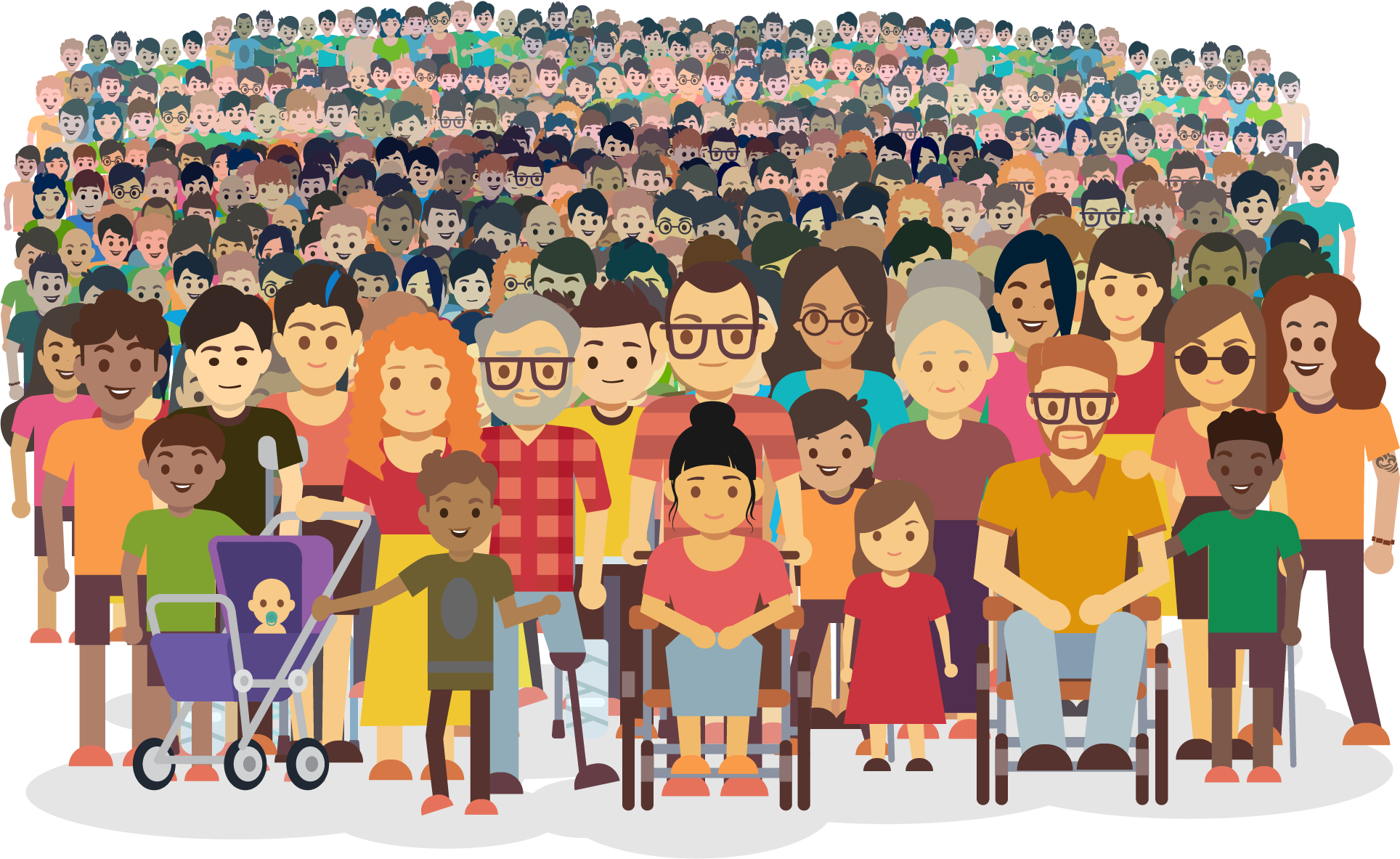
Good accessibility helps people with disability, but it also supports older people, parents with prams, carers, children, people recovering from injury and anyone whose needs change over time. Inclusive design is not a niche benefit. It is better community design.
The next time you enter a park, café, workplace or community venue, ask: who can join me here and who has quietly been designed out?
Then take one step: ask the venue about access, report the locked toilet, photograph the entrance, support an upgrade, include lived experience in the decision, or share accurate information. Change does not begin with a perfect building. It begins when exclusion is no longer treated as normal.
Research and useful links
Australian Bureau of Statistics — Disability, Ageing and Carers, Australia: Summary Findings
Australian Institute of Health and Welfare — People with disability in Australia: Social inclusion
Euan’s Guide — Access Survey
AccessAble — Accessibility and You Survey 2023–2024
Australia’s Disability Strategy 2021–2031
NDIS — Social and community participation support


